
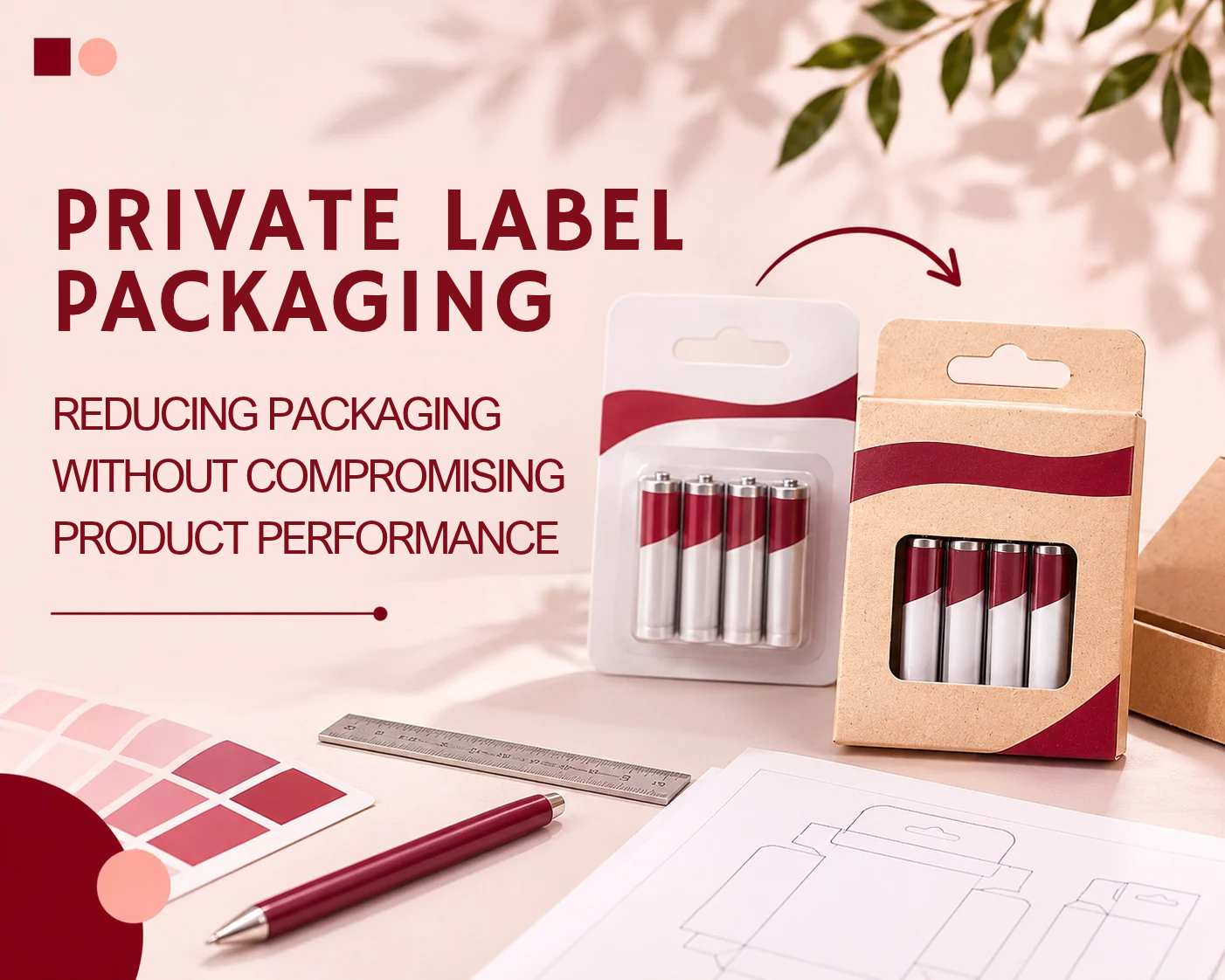
Private label packaging: how to reduce packaging without compromising product performance
A slightly thinner cardboard box, a lighter pouch, a few millimetres shaved off a pack… On paper, reducing packaging can seem fairly straightforward.
In practice, it’s a different story.
Take a box of adhesive bandages, for example. Reducing its dimensions might save cardboard. But the bandages still need to fit inside, regulatory information must remain legible, the packaging needs to withstand handling, and the product must still be suitable for retail display.
And what works for adhesive bandages won’t necessarily work for a sheet mask, a pack of batteries or a household cleaning product.
This is one of the main challenges of private label packaging design and optimisation: reducing the amount of material used without compromising product protection, logistics, usability or cost.
At Kapa Reynolds, these considerations are part of our packaging team’s daily work. Because there’s much more to packaging than choosing a material or designing artwork.
REDUCING PACKAGING: A GROWING PRIORITY FOR RETAILERS
In France, the recycling rate for household packaging reached 73% in 2025, according to figures published by Citeo in June 2026.
However, recycling performance still varies considerably depending on the material:
- 83% for paper and cardboard
- 88% for glass
- 43% for aluminium
- 30% for plastic packaging
These figures highlight the progress made, but also the limitations of recycling. Reducing the environmental impact of packaging also means taking action further upstream, at the design stage.
For retailers, this applies not only to the packaging consumers see on shelves, but also to the secondary and transport packaging used throughout the supply chain.
European regulations are accelerating change
The new EU Packaging and Packaging Waste Regulation (PPWR), generally applicable since 12 August 2026, is progressively introducing stricter requirements for packaging placed on the European market.
The regulation includes measures relating to waste prevention, recyclability, unnecessary packaging and recycled content, with different implementation timelines depending on the requirements.
For retailers and their private label suppliers, these changes make it increasingly important to anticipate decisions regarding materials, packaging formats and product presentation.
But beyond regulatory requirements, there is a very practical question: how far can packaging be reduced without compromising its essential functions?
BEHIND EVERY PRIVATE LABEL PACKAGING DESIGN IS A TEAM YOU RARELY SEE
When we think about packaging, we often think about design: shapes, colours, graphics and the information displayed on the shelf.
Yet the work starts long before the artwork is approved.
At Kapa Reynolds, Léonard and Sacha, our packaging team, handle much more than graphic design and artwork adaptation.
Material selection, dimension optimisation, technical artwork preparation, regulatory requirements, packing configurations and palletisation… Every project comes with its own set of questions.
Can this box be made smaller? Will the cardboard be strong enough? Will all mandatory information remain legible? Will the new format work with the manufacturer’s packing equipment?
And above all, will the change actually bring an improvement?
Packaging has several jobs to do
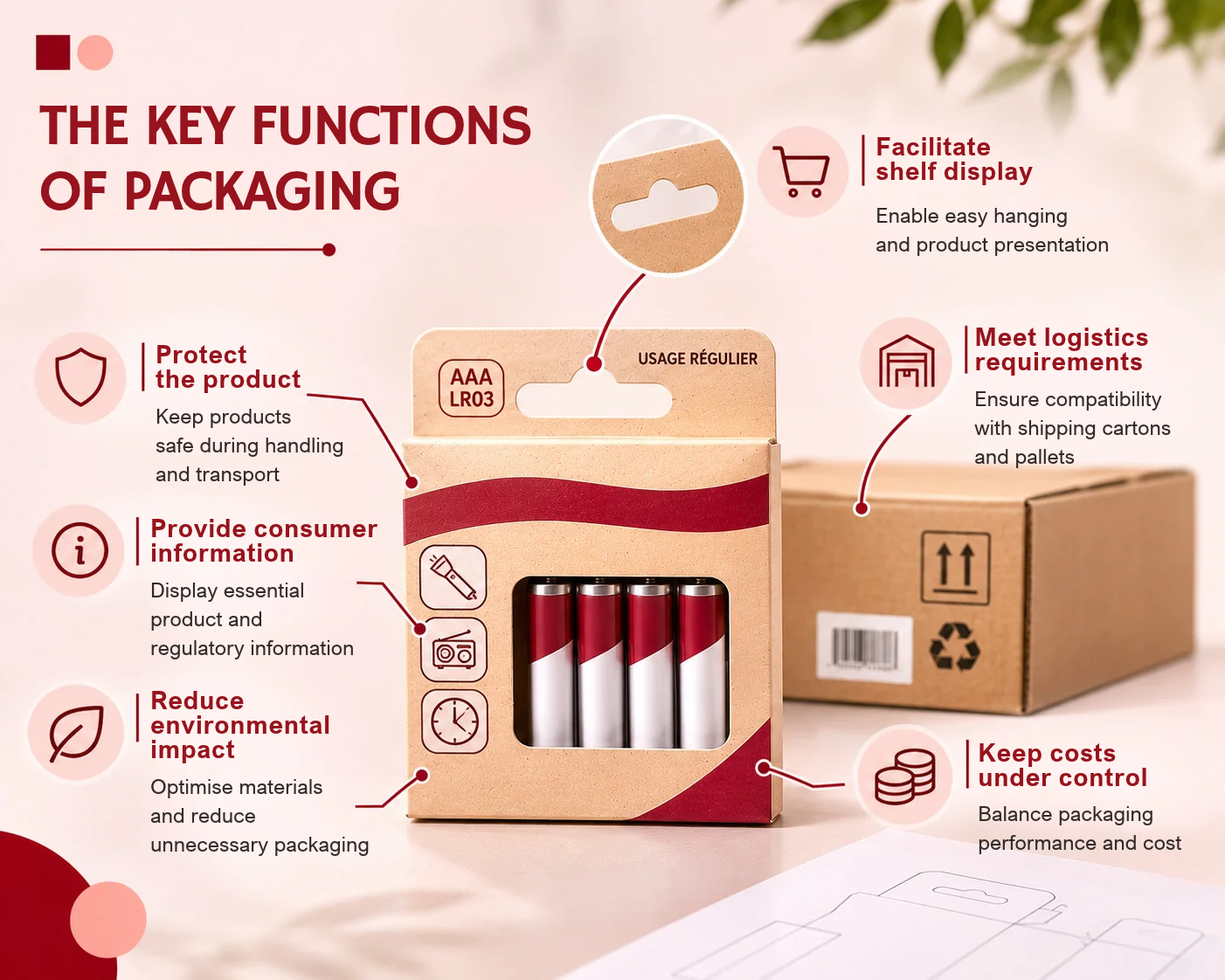
Take the development of a private label battery range, for example.
The packaging needs to display the product clearly, keep the batteries securely in place and withstand handling, from packing through to the retail shelf.
It must also accommodate regulatory information, barcodes and any specific retailer requirements.
Even seemingly minor details matter, such as the Euro slot, the die-cut opening that allows products to hang on retail display hooks.
And the work doesn’t stop once the artwork has been approved.
Outer case dimensions, the number of units per shipping carton and pallet configurations must also be considered.
To address these points, Léonard and Sacha work closely with manufacturers and other Kapa teams, including Sales, Quality, Supply Chain and Logistics.
Packaging is a collaborative process, where a seemingly small adjustment can have consequences across several stages of product development.
When a few millimetres make a difference
Imagine reducing the dimensions of a cardboard sleeve or carton.
At individual product level, the saving may seem insignificant.
But if that adjustment makes it possible to fit more units into an outer case, or more cases onto a pallet, the benefits can become much more meaningful.
Conversely, poorly planned dimensions can complicate industrial packing processes or create unnecessary empty space during transport.
This is why private label packaging optimisation cannot be considered at individual pack level alone.
It also needs to account for production volumes and the wider supply chain.
USING LESS MATERIAL WITHOUT COMPROMISING PRODUCT PROTECTION
Reducing cardboard grammage, using a thinner plastic film or removing a packaging component may seem like obvious solutions.
But every change needs to be assessed against the product’s specific requirements.
Cardboard: lighter isn’t always better
For a box of adhesive bandages or a battery carton, reducing cardboard grammage can help lower material consumption.
But the packaging still needs to provide sufficient strength.
Cardboard that is too lightweight may become distorted during handling, offer insufficient stacking resistance or fail to maintain its shape on the shelf.
Packaging teams therefore need to strike a balance between material reduction, structural strength, industrial constraints and retail presentation.
The decision isn’t simply about cardboard thickness. Its composition, structure and intended conditions of use also matter.
Sheet masks: when packaging also protects the formula
Other product categories present very different challenges.
A sheet face mask, for example, is generally packed in a flexible pouch designed to preserve the formula and limit exchanges with the external environment.
Reducing film thickness or changing its composition can affect barrier properties, mechanical resistance or seal integrity.
Any packaging change therefore needs to be reviewed with the manufacturer and Quality teams, taking into account the formula, expected shelf life, and storage conditions.
What looks like a straightforward reduction in plastic may require much more extensive technical checks.
At Kapa, dealing with these different requirements is part of our everyday work. We develop products across categories including personal care, beauty, first aid, household cleaning and general merchandise.
There is no one-size-fits-all packaging solution.
PACKAGING ECO-DESIGN: RETHINKING MATERIALS AND FORMATS
Replacing plastic with cardboard is often seen as an environmental improvement.
In some cases, this can be a relevant solution. In others, it may not be suitable for the product’s requirements.
Cardboard packaging can work well for certain personal care accessories or general merchandise products, but it cannot directly replace a flexible pouch containing a liquid formula.
Barrier properties, moisture resistance, sealing performance and compatibility with industrial equipment all need to be considered.
This approach to using packaging materials more thoughtfully is not new to Kapa Reynolds. In our article “Is a plastic-free world possible ?”, we explored why plastic can still play an important role in protecting and preserving certain products.
From plastic blister packs to cardboard: a real example from Kapa Reynolds
Eco-design can sometimes mean completely rethinking an existing packaging format.
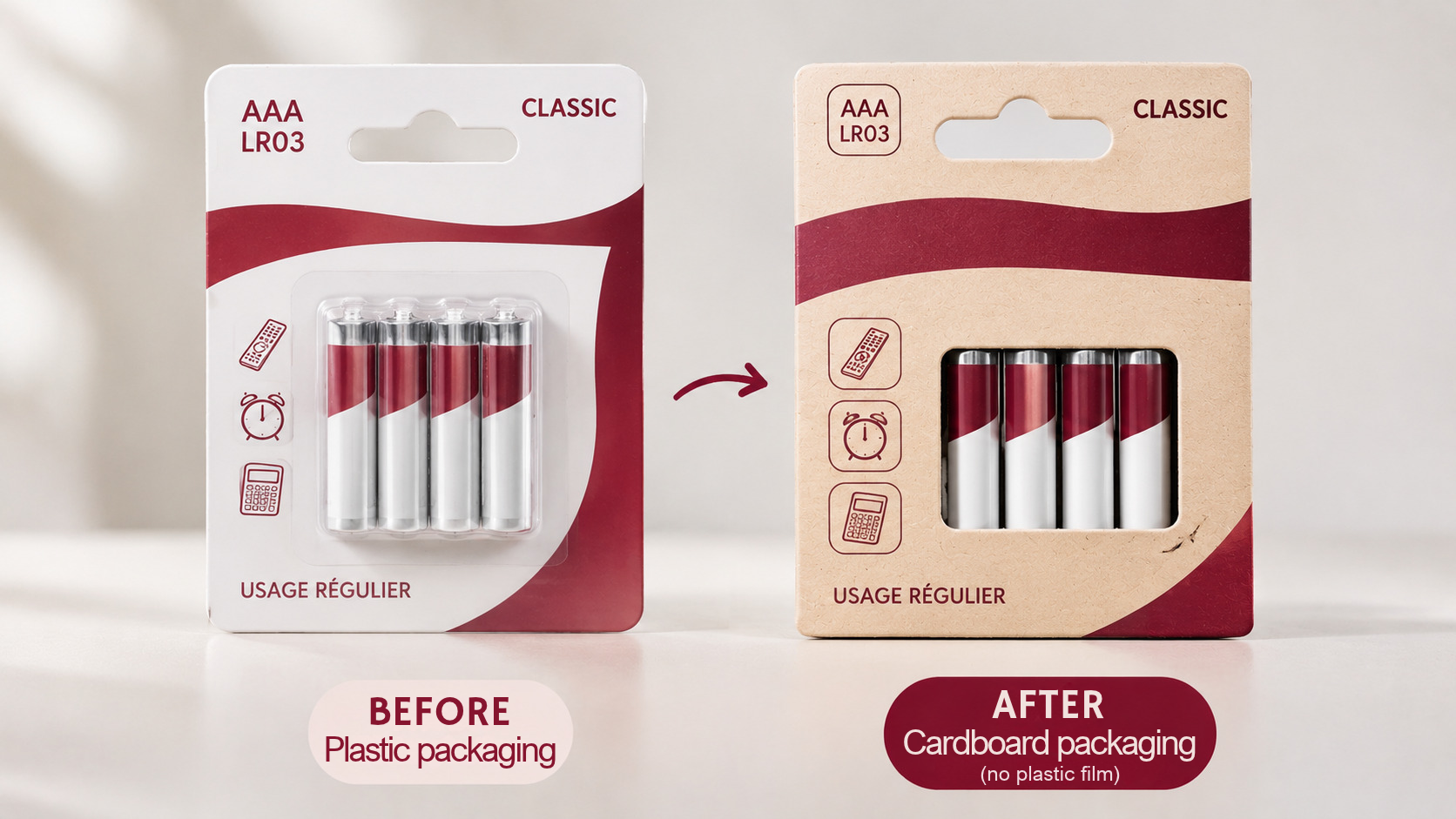
This was the case for a project carried out by Kapa Reynolds for a major retailer, involving the transition of a battery range from traditional plastic blister packs to cardboard packaging without a plastic blister.
The change is immediately visible on the shelf, but it requires several aspects of the packaging to be reconsidered.
How can the batteries be kept securely in place without a plastic shell? How can product visibility be maintained? How can all the necessary information fit onto the new packaging while preserving its retail presentation?
The chosen solution was a cardboard pack featuring a die-cut window, with no additional plastic film.
Consumers can still see the batteries, while the packaging retains a format suitable for hanging displays.
The change also involves considerations such as the structure of the carton, battery retention, industrial packing requirements and outer case dimensions.
This project illustrates the work carried out by our packaging team and industrial partners: redesigning private label packaging to eliminate plastic components while maintaining the product’s technical and commercial requirements.
This project is part of a packaging improvement approach that Kapa Reynolds has been pursuing for several years. We previously explored the gradual reduction and elimination of plastic blister packs in our article “Building our product ranges without plastic”.
Simplifying packaging rather than adding unnecessary components
Eco-design can also involve less visible changes.
Reducing empty space, removing an unnecessary component, adjusting the dimensions of a carton or simplifying the combination of different materials are all possibilities worth exploring.
Depending on the materials and available recycling systems, these changes can also simplify packing operations or improve recyclability.
For private label products sold in large volumes, small improvements can add up.
But their industrial feasibility and practical value must always be assessed.
PACKAGING OPTIMISATION ALSO EXTENDS TO SHIPPING CARTONS AND PALLETS
When retailers look to reduce packaging, attention often focuses on the packaging consumers see.
Yet some opportunities for optimisation lie elsewhere.
Outer cases and transport packaging play an essential role in protecting products during storage and distribution.
The outer case: packaging consumers never see
An outer case needs to protect products during transport, facilitate handling and withstand stacking constraints.
Its dimensions, board thickness and strength must be suited to the products it contains.
At Kapa, packaging development also takes these parameters into account.
The aim may be to reduce unused space, adjust carton dimensions or improve the way products are arranged on pallets.
However, reducing cardboard to the bare minimum is not necessarily the best solution.
Insufficiently robust packaging can increase the risk of damage during transport, with both economic and environmental consequences.
Packaging optimisation also involves logistics teams
These considerations don’t remain solely within the packaging department.
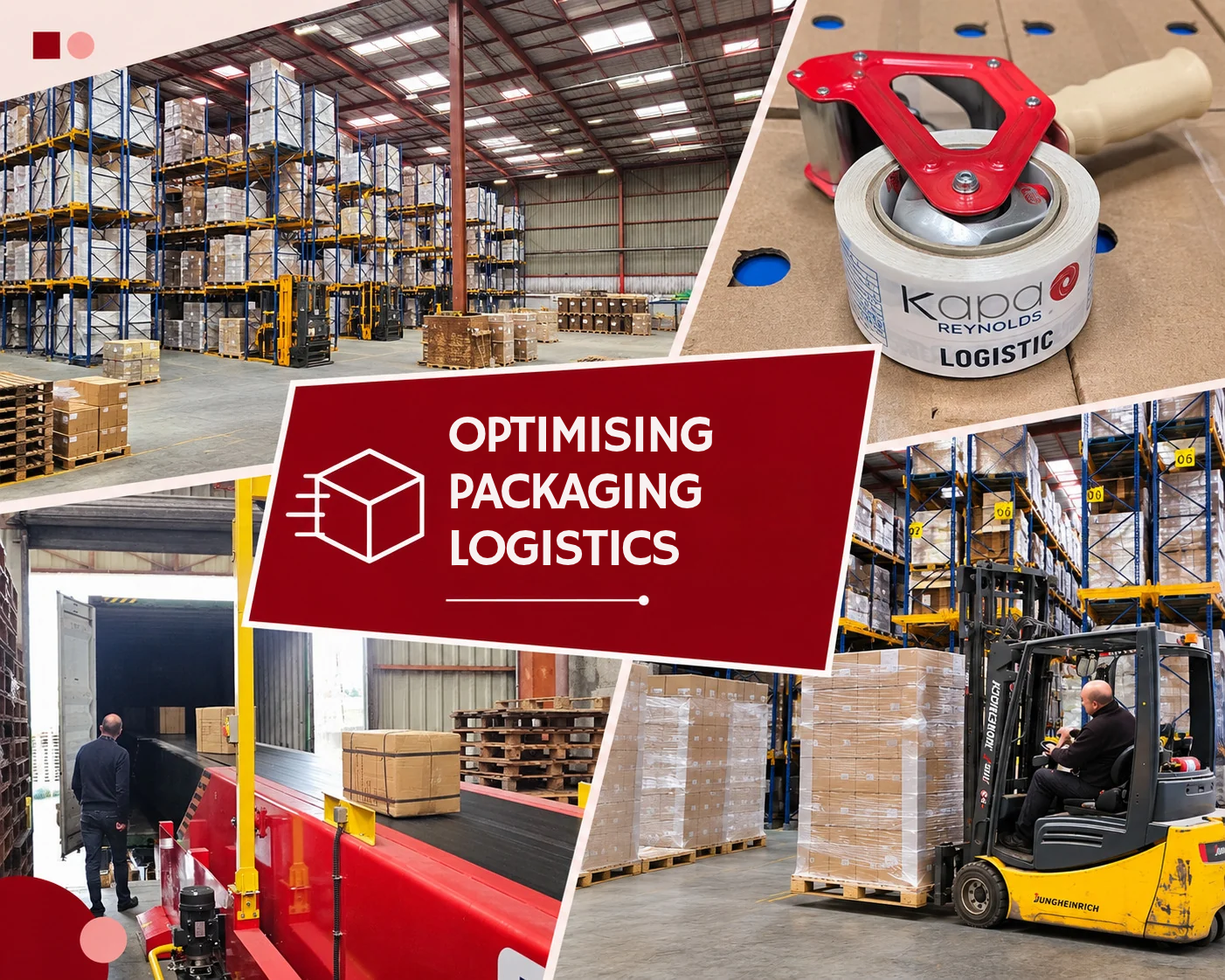
At our logistics warehouse, teams need to receive, store, handle and dispatch products efficiently and safely.
Changing the number of units per carton or adjusting pallet configurations can affect handling operations, warehouse space and order preparation.
Conversely, better-sized packaging can make these operations easier and improve the use of available space.
This is why communication between Packaging and Logistics teams is so important.
The value of a packaging change needs to be assessed beyond material savings alone.
Well-optimised packaging also needs to work in real-life logistics operations.
FROM PRODUCT BRIEF TO RETAIL SHELF: HOW KAPA TEAMS WORK TOGETHER
Packaging development involves several areas of expertise, often from the earliest stages of a project.
Our Sales teams gather retailers’ requirements, including range positioning, preferred formats, price constraints, shelf presentation and specific specifications.
The Marketing team contributes market analysis, product positioning and consistency in product presentation.
The Packaging team works with manufacturers on technical possibilities, including dimensions, materials, packaging structures, artwork and packing requirements.
Meanwhile, Quality and Regulatory Affairs teams ensure that product information and applicable requirements are properly addressed.
Finally, Supply Chain and Logistics teams contribute to decisions relating to packing configurations, volumes, storage and transport.
One packaging change can involve several departments
Imagine a manufacturer proposing a new packaging material to reduce costs or material consumption.
Before approving the change, several questions need to be addressed.
The Packaging team must check its technical suitability. Quality must ensure that the applicable requirements are still met. Sales needs to assess any implications for the retailer’s specifications, while Logistics may be involved if the packing configuration changes.
What initially appears to be a simple decision can therefore require several discussions.
This is precisely why collaboration between different departments matters.
This cross-functional approach is also part of our quality management practices, as explained in our article on Kapa Reynolds’ IFS Broker certification.
Anticipating constraints rather than correcting them later
The earlier packaging requirements are identified, the more opportunities there are to explore different solutions.
Changing a format before artwork approval and production launch is generally easier than revisiting packaging once the entire project has been finalised.
This is why dimensions, materials, regulatory compliance and logistics should be considered from the initial product brief.
At Kapa Reynolds, our role is also to support retailers through these decisions, drawing on our product knowledge and close collaboration with industrial partners.
This cross-functional approach is part of our private label product development expertise, from initial concept through to the retail shelf.
PRIVATE LABEL PACKAGING: WHAT SHOULD BE CONSIDERED WHEN OPTIMISING A PACK ?
Several criteria need to be considered before making changes to an existing packaging format.
Product protection: Does the packaging maintain the required strength, sealing properties or product preservation?
Material consumption: Can the weight, dimensions or number of components be reduced without compromising essential functions?
Recyclability: Are the materials and their combination compatible with the relevant sorting and recycling systems?
Logistics: Can the new format improve packing efficiency, transport or storage?
Regulatory compliance: Are mandatory product information and applicable packaging requirements still met?
Industrial feasibility and cost: Can the solution be manufactured reliably, at the required volumes and within the retailer’s target price positioning?
These criteria need to be considered together. Improving one aspect should not create disproportionate disadvantages elsewhere.
REDUCING PRIVATE LABEL PACKAGING: A PRODUCT-BY-PRODUCT APPROACH
Reducing packaging isn’t simply about removing cardboard or using thinner plastic film.
It may involve reviewing product dimensions, changing packing configurations, adjusting pallet layouts or comparing different technical solutions.
And not every option will necessarily be appropriate.
This is what makes the work of packaging teams so important. Behind a slightly smaller box or a better-sized shipping carton are discussions with manufacturers, technical checks and decisions involving several departments.
For retailers, the challenge is to improve private label packaging while maintaining product quality, compliance, practicality and the right price positioning.
At Kapa Reynolds, we support these considerations as part of our private label product development projects.
Looking to develop a new private label product or optimise its packaging?
Our teams can help you explore technical and industrial solutions suited to your project.
FAQ: PRIVATE LABEL PACKAGING AND ECO-DESIGN
How can private label packaging be reduced ?
Private label packaging can be reduced by lowering material grammage, optimising dimensions, removing unnecessary components or improving transport packaging. Each change must preserve product protection, regulatory compliance and industrial feasibility.
What are the main criteria for eco-designing private label packaging ?
The main criteria include the quantity and type of materials used, product protection, recyclability, environmental considerations, logistics and costs. Packaging choices should be assessed according to the product’s requirements and the practical implications of each solution.
Why is optimising outer cases and palletisation important ?
Optimising outer cases and palletisation can help reduce unused space, make better use of transport capacity and limit certain material requirements. These improvements must remain compatible with product protection and handling constraints.
How does Kapa Reynolds support private label packaging projects ?
Kapa Reynolds brings together its Packaging, Marketing, Sales, Quality and Logistics teams, working closely with industrial partners. This collaborative approach helps assess materials, dimensions, regulatory requirements and packing configurations according to the needs of each private label project.